
Wood Heat Is Good Heat: The Renewable Fuel That Pays for Itself
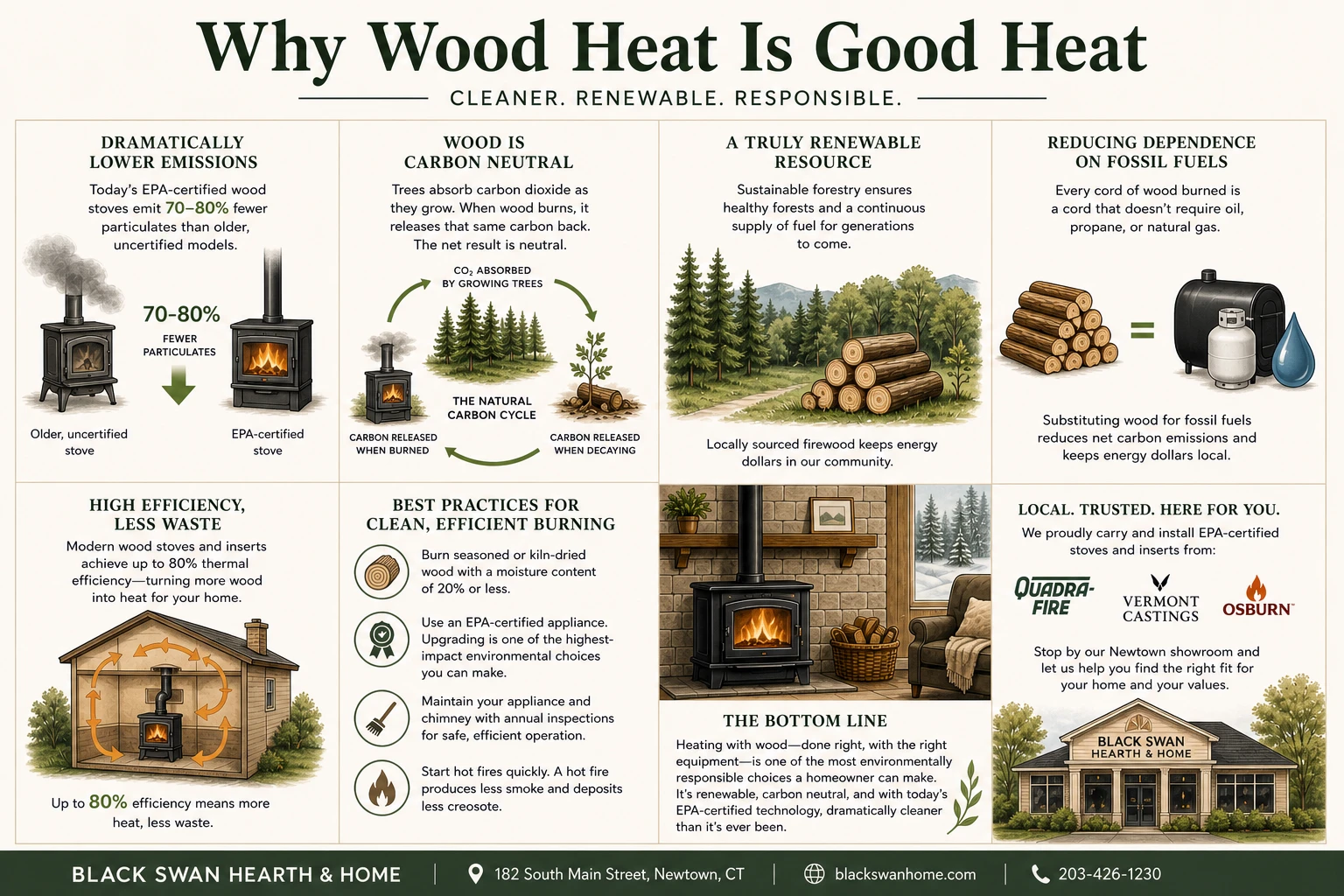
Are you still relying on oil, propane, or gas to heat your home? There's a smarter, more efficient way — and more Connecticut homeowners are making the switch to wood heat every year. Modern wood stoves and inserts have come a long way from the smoky, inefficient models of the past. Today they're cleaner, more powerful, and more economical than most people realize.
What Makes Modern Wood Heat Different
Today's EPA-certified wood stoves and inserts are a completely different product from what most people picture. The technology has advanced dramatically over the past two decades.
"Wood is the only heating fuel that is truly renewable. It grows back. Oil, gas, and propane do not."
The Catalytic Combustor: The Burn Behind the Burn
When wood burns, it produces smoke — a mix of gases, water vapor, and unburned particles. In a standard stove, most of that goes straight up the chimney, taking wasted energy with it. A catalytic combustor captures it.
Inside the stove sits a honeycomb-shaped element coated with precious metals — typically palladium or platinum. Once the stove is up to temperature, the bypass damper is engaged and all smoke is routed through this element. The catalyst causes those gases to reignite at just 500°F — far below the 1,100°F required in a non-catalytic stove. This is the second burn: a cleaner, hotter combustion of gases that would otherwise be wasted as smoke.
The result is more heat from the same load of wood, dramatically less creosote in your chimney, longer burn times, and far fewer emissions. Vermont Castings' iconic Encore is one of the most celebrated catalytic stoves ever built — and we carry it in both showrooms.
What Does It Actually Cost — and Is It Worth It?
Why Spring Is the Best Time to Install
- Schedules are packed — long waits
- Installs are delayed into heating season
- Decisions get rushed
- You pay oil prices for another winter
- No waiting — install on your schedule
- Ready before the first frost hits
- Time to choose the right model for your home
- Start saving from day one of heating season
Let's Get You Ready Before Everyone Else Does
Stop by either showroom or reach out — we'll walk you through options, pricing, and what makes sense for your home. No pressure. Just honest guidance.