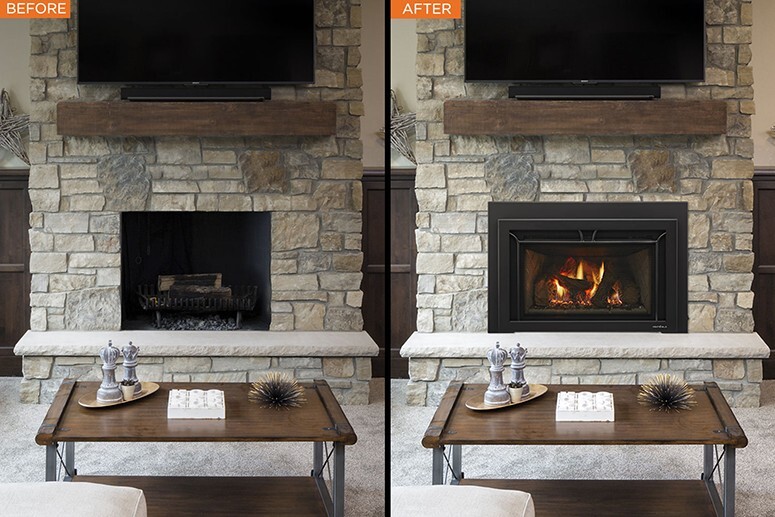
A gas insert is one of the quickest, cleanest ways to update a room—adding reliable heat, a focal point, and modern convenience without the work of a full fireplace rebuild. Whether you want increased comfort, lower heating costs, or an upgraded aesthetic, a gas insert can transform your living space with minimal disruption.
Why Choose a Gas Insert
- Instant warmth and consistent heat: Gas inserts deliver controllable heat on demand without the variability of wood fires.
- Clean and low-maintenance: No ashes, creosote, or chopping wood—just periodic cleaning and annual service.
- Higher efficiency: Modern inserts are designed to convert more fuel to usable heat than open wood fireplaces.
- Ease of use: Remote controls, thermostats, and programmable settings make operation simple.
- Aesthetic variety: Realistic logs, coals, glass ember beds, and multiple face and surround styles fit any decor.
Choosing the Right Gas Insert
- Measure your space: Know the dimensions of your current fireplace cavity and room to pick an appropriately sized unit.
- Heat output (BTUs): Match the BTU rating to room size—too low won’t heat effectively; too high can make smaller rooms uncomfortably warm.
- Venting options: Direct vent (sealed combustion) is common for efficiency and indoor air quality. Vent-free models exist but are restricted in some areas.
- Style and finish: Choose from traditional log sets to contemporary glass and linear designs; select faceplates, trim, and mantels that complement your room.
- Controls and features: Consider remote control, thermostatic operation, programmable timers, and safety shutoffs.
Preparation and Installation Overview
- Code and permits: Check local building codes and whether permits are required—especially for changes to venting or gas lines.
- Professional assessment: Have a certified installer inspect your existing fireplace, venting, and gas supply. They’ll verify clearances and compatibility.
- Gas supply: Installation may require adding or upgrading a gas line. Always use licensed gas fitters.
- Venting installation: Direct vent systems require a new flue or chase for the coaxial pipe; existing masonry flues often need liners.
- Timeline and disruption: Most insert installations take a day or two; expect minor dust and finishing work around the hearth.
Design and Styling Tips
- Make the insert the focal point: Update the surround or mantel with paint, tile, stone, or wood to highlight the new unit.
- Match scale to room: A long, linear insert suits contemporary living rooms; a traditional arched face fits classic spaces.
- Complementary materials: Pair warm metal finishes with natural stone or matte tiles for a cozy, modern look.
- Accessories: Add a hearth rug, curated mantel decor, or built-in shelving to create a cohesive vignette.
- Lighting and seating: Arrange seating to face the fire and use layered lighting to enhance ambiance in the evenings.
Safety and Maintenance
- Annual service: Have a qualified technician inspect burners, connections, and venting yearly.
- Carbon monoxide protection: Install CO detectors near sleeping areas and on each floor.
- Keep clearances: Maintain recommended clear space from combustibles; follow manufacturer guidelines for hearth extension and mantle clearances.
- Cleaning: Wipe glass as recommended, vacuum intake areas, and dust logs or glass ember beds.
- Troubleshooting: If you smell gas, hear unusual noises, or experience ignition problems, turn off the unit and call a professional.
Cost Considerations
- Unit price: Inserts vary widely—basic models are affordable; premium, highly realistic units cost more.
- Installation: Budget for venting, gas line work, liner installation, and any surround/mantel updates.
- Long-term savings: Higher efficiency can reduce heating bills, offsetting installation costs over time.
A gas insert is a practical, stylish upgrade that elevates comfort, convenience, and the look of your living space. With the right size, venting, and professional installation, you’ll gain an efficient heat source and a lasting focal point that boosts both daily living and home value.