
Black Swan Hearth & Home · Connecticut Hearth Guide
How inserts turn drafty masonry fireplaces into real heat sources, and what homeowners and contractors need to know about efficiency, comfort, and Connecticut building codes.
If you own a Connecticut home with an old masonry fireplace, you are probably losing more heat than you are gaining every time you light a fire. A fireplace insert solves that problem. It is a sealed, high efficiency heating appliance that installs directly into your existing masonry fireplace opening, converting a drafty showpiece into a genuine heat source that can warm your home all winter.
This guide explains how fireplace inserts work, why they matter so much in Connecticut's climate, what homeowners and contractors need to know about state building and energy codes, and when it makes sense to bring in a specialty hearth dealer like Black Swan Hearth & Home.
Where does the heat actually go?
An open fireplace sends most of its heat, plus air your furnace already paid to warm, straight up the chimney. A sealed insert keeps that heat in your home.
What Is a Fireplace Insert?
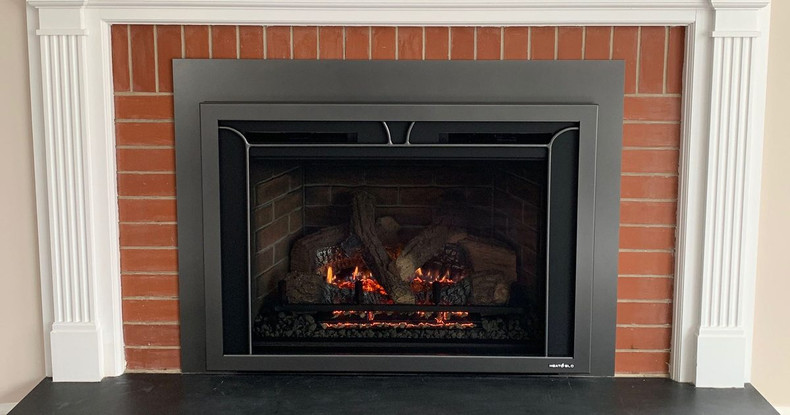
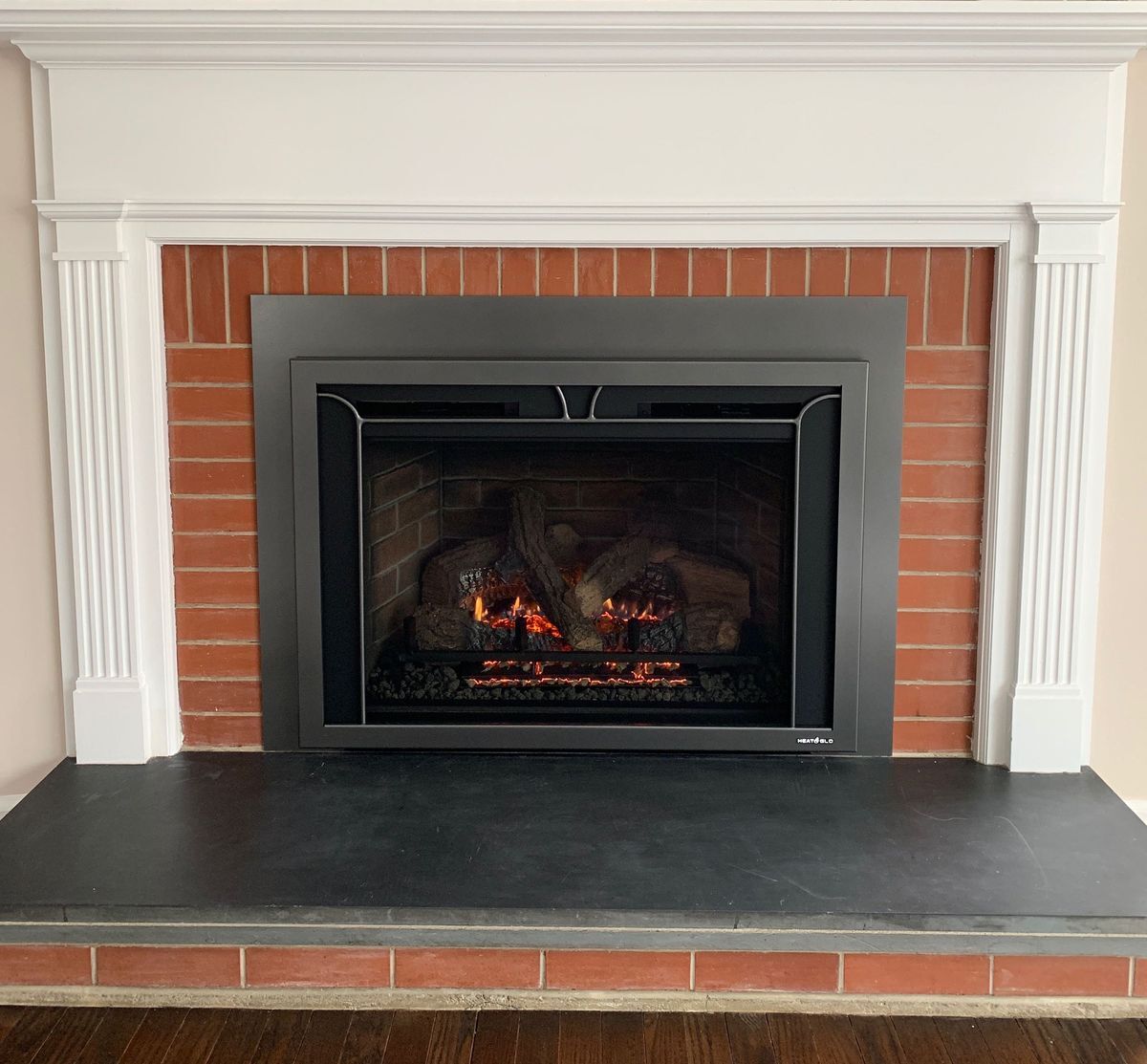
A fireplace insert is a factory built firebox, fueled by gas, wood, or pellets, that slides into an existing masonry fireplace. It includes a sealed combustion chamber, insulated glass, and a dedicated venting liner that runs up through your existing chimney. Most models also include a blower that pushes heated air into the room.
The key difference between an insert and an open fireplace is efficiency. An open masonry fireplace typically operates at 10 percent efficiency or less. Modern gas inserts routinely reach 70 to 80 percent efficiency, and EPA certified wood inserts perform in a similar range. That means the vast majority of the heat your fuel produces actually stays in your home instead of going up the chimney.
Why Are Old Masonry Fireplaces in Connecticut So Inefficient Without Inserts?
Old masonry fireplaces are inefficient because they pull large volumes of already heated air out of your home and send it up the chimney, often losing more heat than the fire produces. Connecticut's housing stock makes this problem especially common. Fairfield and Litchfield Counties are full of colonials, capes, and farmhouses built with open masonry fireplaces long before anyone thought about energy performance.
Here is what is working against you with an open masonry fireplace:
The chimney acts as a constant exhaust. An open fireplace can draw hundreds of cubic feet of air per minute out of your living space. That air was heated by your furnace or boiler, and it is being replaced by cold outside air pulled in through every gap in your home's envelope.
The damper never seals completely. Even when the fireplace is not in use, a metal throat damper leaks conditioned air 24 hours a day, all winter long. Many older dampers are warped, rusted, or stuck partially open.
Masonry absorbs heat instead of delivering it. Brick and stone soak up heat from the fire, and most of that heat conducts outward through the chimney mass rather than radiating into your room.
Negative pressure creates drafts. As the fire pulls air up the chimney, it depressurizes the house, which is why the room with the fireplace often feels colder near the floor even while the fire is burning.
An insert addresses all four problems at once. The sealed firebox stops the air loss, the insulated liner keeps combustion contained and controlled, and the blower actively distributes heat into the living space.
How Do Fireplace Inserts Improve Comfort in Drafty Connecticut Living Rooms?
Fireplace inserts improve comfort by sealing off the largest air leak in the room and replacing it with a controlled, thermostat capable heat source. In a typical drafty Connecticut living room, the fireplace opening is the single biggest hole in the building envelope. Sealing it changes how the whole room feels.
Homeowners notice three things after an insert installation:
- The cold draft near the fireplace disappears. With the flue sealed by an insulated liner and the opening closed by the insert surround, the chimney stops siphoning warm air out of the room.
- Heat becomes even and consistent. Gas inserts from brands like Heat & Glo can run on a thermostat or remote, cycling like a furnace to hold a set temperature. Wood inserts from Quadra-Fire and Vermont Castings deliver long, controlled burns instead of the fast, hot flash of an open fire.
- The room becomes usable in deep winter. Many customers tell us their fireplace room was the coldest room in the house before the insert and the warmest one after. For homes heated with oil, which is still common across Connecticut, zone heating with an insert can take real pressure off heating bills by warming the rooms you actually live in.
How Do Fireplace Inserts Help Contractors Meet Energy Codes on Connecticut Projects?
Fireplace inserts help contractors meet Connecticut energy code requirements because they replace one of the worst performing assemblies in a home with a sealed, tested, high efficiency appliance. Connecticut currently enforces the 2022 Connecticut State Building Code, which incorporates the 2021 International Energy Conservation Code (IECC) with state amendments. That code puts real emphasis on air sealing and building envelope performance, including blower door testing on new construction.
For remodelers and builders, this matters in several concrete ways:
Open fireplaces hurt blower door results. An unsealed masonry fireplace is a major source of air leakage. New wood burning fireplaces are required to have tight fitting flue dampers or doors, and factory built sealed units and inserts eliminate the leakage path entirely.
Sealed combustion protects indoor air quality compliance. Direct vent gas inserts draw combustion air from outside and exhaust outside through a coaxial liner system. Nothing is borrowed from the conditioned space, which supports both energy performance and safe operation in today's tighter homes.
Listed appliances simplify inspections. Inserts are tested and listed to national standards and installed to the manufacturer's instructions, which gives local building officials clear documentation. That is a much cleaner inspection conversation than evaluating a site built masonry assembly.
Efficiency ratings support HERS and performance path compliance. When a project is using a performance based compliance path, swapping an open fireplace for a 75 percent efficient sealed insert is a meaningful improvement rather than a penalty.
Note for Contractors
Code enforcement in Connecticut happens at the local level, and towns across Fairfield and Litchfield Counties can differ in how they handle hearth permits and inspections. Confirm requirements with the local building official early, and bring your hearth dealer into the conversation before framing and venting decisions are locked in.
What Code Requirements Apply When Installing a Fireplace Insert in Connecticut?
Installing a fireplace insert in Connecticut is regulated work under the Connecticut State Building Code, and the requirements center on the chimney, the clearances, and the permit. Here is what homeowners and contractors should expect:
A permit and inspection are required. Your town's building department treats an insert installation like any other regulated mechanical work. A professional installer pulls the permit and schedules the inspection as part of the job.
The chimney must be lined for the insert. Modern installations run a dedicated stainless steel liner from the insert to the top of the chimney, sized to the appliance. Venting an insert into an unlined or oversized masonry flue causes poor draft and creosote buildup, and it will not pass inspection.
The existing chimney and firebox must be sound. Cracked flue tiles, damaged masonry, or a compromised smoke chamber need to be addressed before an insert goes in. This is why a professional assessment of the chimney is part of every quote we prepare.
Clearances to combustibles still apply. Every insert has listed clearances to the mantel, surround trim, and any combustible materials near the opening, spelled out in the installation manual. Low mantels and wood surrounds on older fireplaces are the most common conflict, and there are tested solutions like mantel shields when the geometry is tight.
The hearth extension matters. The noncombustible hearth in front of the fireplace must meet the requirements listed for the specific insert, which occasionally means extending it on older homes with shallow hearths.
None of this should scare anyone off. These requirements are exactly why insert installations done right last for decades, and a specialty dealer handles all of it as a matter of routine. Enforcement is local, so requirements can vary a little between towns across Fairfield and Litchfield Counties, and we coordinate with the building official as part of every installation.
How Do Fireplace Choices Impact Energy Performance in Connecticut Remodels?
The fireplace decision in a remodel can swing a home's energy performance in either direction. Keeping or adding an open masonry fireplace introduces a permanent air leak and a net heat loss. Installing a sealed insert or a modern factory built fireplace adds an efficient supplemental heat source and improves the envelope at the same time.
For Connecticut remodels, here is how the main options compare:
Convenience and control
70 to 80 percent efficiency on natural gas or propane, with thermostat and remote operation. Most models produce heat during power outages. Heat & Glo builds some of the most proven gas inserts in the industry.
Serious heating power
Modern EPA certified models from Quadra-Fire, Vermont Castings, and Osburn burn cleanly and can heat a substantial portion of a home, offering independence from oil and propane prices.
Set it and forget it
Pellet inserts such as those from Harman deliver thermostat controlled, long duration heat with a renewable fuel, with less daily tending than wood.
In a whole house remodel, the right move is to treat the fireplace as part of the mechanical and envelope plan rather than a finish detail, the same approach we recommend for home heating in new Connecticut builds. That is where a specialty hearth dealer adds value that a general supplier cannot.
When Should You Consult a Hearth Specialist?
Bring in a hearth specialist as early as possible, and definitely before framing, venting, or gas line decisions are finalized. You should consult a dealer like Black Swan Hearth & Home when:
- You have an existing masonry fireplace and want to know which inserts will fit your firebox dimensions and chimney
- You are a contractor or builder who needs specification sheets, framing dimensions, and venting plans for a new construction or remodel project
- You want a professional assessment of your chimney and liner before installing any insert
- You need the installation handled by an experienced crew, permitted and inspected correctly
- You want to compare gas, wood, and pellet options side by side with live burning displays
Black Swan Hearth & Home has served Connecticut homeowners and contractors since 1979. We are a Platinum level Hearth & Home Technologies dealer carrying Heat & Glo, Heatilator, Harman, Quadra-Fire, and Vermont Castings, along with Osburn, Ortal, Town and Country, and Napoleon. Our team handles everything from product selection through professional installation and inspection.
Frequently Asked Questions
Do fireplace inserts require a permit in Connecticut?
Yes. Installing a fireplace insert is regulated work under the Connecticut State Building Code, and your town's building department will require a permit and inspection. A professional installer handles this as part of the project.
Will an insert fit my existing masonry fireplace?
Most standard masonry fireplaces can accept an insert, but firebox dimensions, hearth depth, and chimney condition all matter. A site visit or a set of measurements and photos is the fastest way to confirm your options.
How much heat does a fireplace insert produce?
Gas inserts typically range from about 20,000 to 40,000 BTU per hour, and wood inserts can heat 1,500 to 2,500 square feet or more depending on the model. The right size depends on your room, your home's layout, and how you plan to use it.
Does a fireplace insert work during a power outage?
Most gas inserts operate without electricity, which makes them a reliable backup heat source during Connecticut winter storms. Blowers require power, but the units still produce radiant heat without them.
Can I install a fireplace insert myself?
Insert installation involves chimney liners, clearances, gas or venting connections, and code compliance, so professional installation is strongly recommended and required for permits and manufacturer warranties in most cases.
Ready to Turn Your Fireplace Into a Real Heat Source?
Visit one of our Connecticut showrooms to see live burning displays, or contact us to schedule a consultation for your home or your next project.