
Black Swan Hearth & Home · Connecticut Hearth Guide
How to compare freestanding stoves and fireplaces for a new Connecticut home, size them correctly for a tight modern envelope, and avoid the smoke and heat loss problems that catch builders off guard.
Choosing home heating appliances for a new build is a different exercise in 2026 than it was even ten years ago. Connecticut's current energy code produces houses that are far tighter and better insulated than the state's older housing stock, and that changes everything about how stoves and fireplaces behave: how much heat you actually need, how chimneys draft, and which appliance types make sense at all.
This guide walks Connecticut homeowners and builders through the real tradeoffs between freestanding stoves and fireplaces, explains why smoke and sizing problems happen, and shows how to plan a hearth that heats well for decades instead of fighting the house it lives in.
How much of the fuel's heat reaches your living space?
Efficiency measures how much of the fuel's energy becomes usable heat in the room. In a new build, the appliance choice is the difference between a heater and a decoration.
How Do Freestanding Stoves Compare to Fireplaces for Heating Connecticut Houses?
Freestanding stoves generally deliver more heat to the room than fireplaces because the entire appliance body radiates warmth from all sides, while a fireplace is built into a wall and gives up one or more surfaces to the structure around it. But the full comparison depends on what job you want the hearth to do.
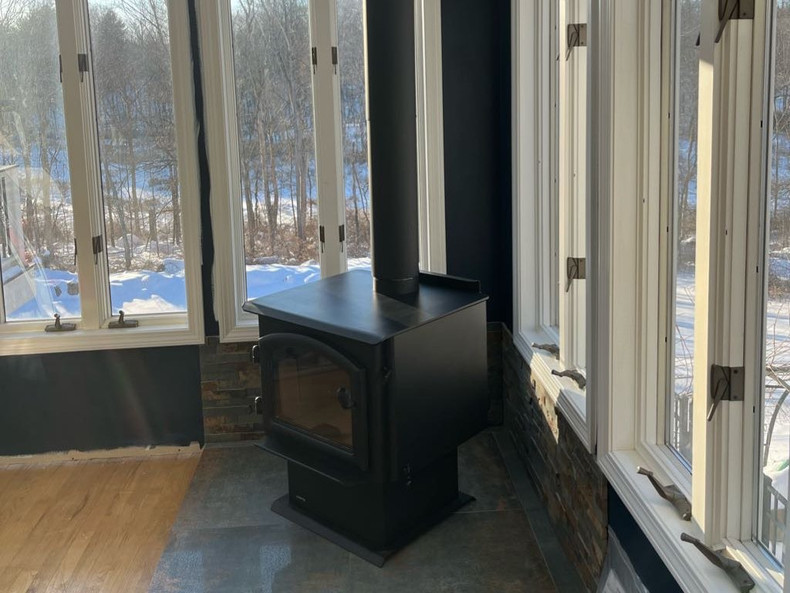
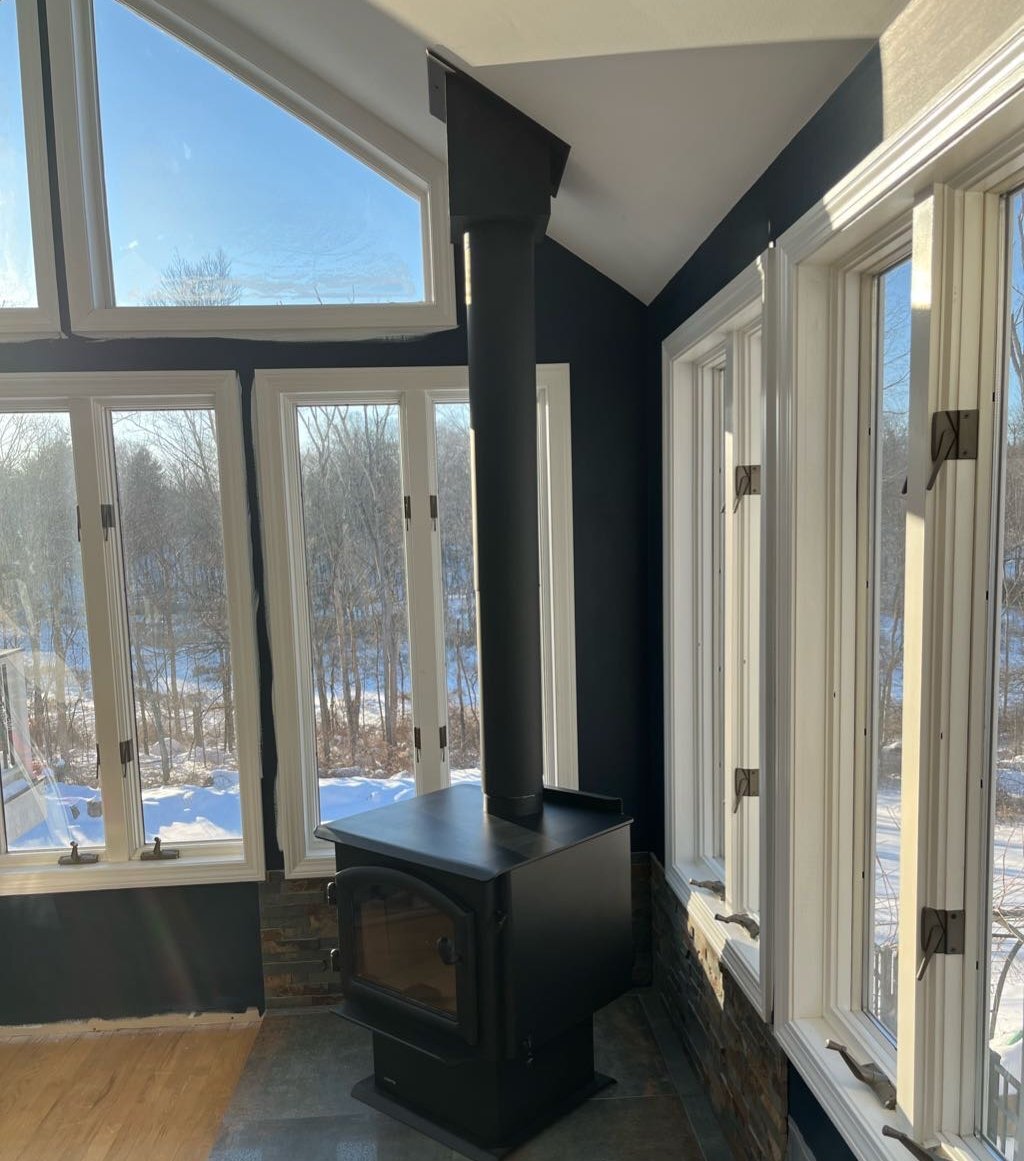
Freestanding stoves are heaters first. A modern EPA certified wood stove from Harman, Quadra-Fire, or Vermont Castings sits out in the room on a hearth pad, radiating from the top, sides, and front. Wood models offer long burn times and complete independence from utilities, which matters in a state where winter outages are a fact of life. Gas stoves offer the same room presence with thermostat control.
Fireplaces are architecture first, heaters second, though modern units close the gap. A direct vent gas fireplace from Heat & Glo or Heatilator is a sealed, high efficiency appliance that can genuinely heat a space while anchoring the room's design. High efficiency wood burning fireplaces also exist and burn far cleaner and hotter than the traditional open masonry fireplaces they replaced. What no longer makes sense in a new Connecticut build is an open masonry fireplace as a heat source, since it loses more warmth than it delivers.
The practical rule: if maximum heat output per dollar of fuel is the priority, a freestanding stove usually wins. If you want a built-in focal point that also heats effectively, a modern direct vent gas or high efficiency wood fireplace does the job. Many of our new construction customers in Fairfield and Litchfield Counties end up with both: a gas fireplace in the main living space and a wood stove in the family room or basement for storm backup and zone heat.
Why Do Some Connecticut Homes Struggle with Smoke from Wood Stoves?
Most wood stove smoke problems come down to draft, and in new Connecticut construction, the usual culprit is the tightness of the house itself. A chimney needs a steady supply of air to pull smoke upward, and a home built to the current energy code is sealed so well that the stove can literally run out of air to breathe.
The common causes, roughly in order of how often we see them:
Negative pressure in a tight house. Range hoods, bathroom fans, clothes dryers, and mechanical ventilation all pull air out of the home. In a tight new build, those exhaust appliances can overpower the chimney and pull smoke backward into the room. The fix is planned makeup air: many stoves can be ordered with an outside air kit that feeds combustion air directly to the firebox, and in new construction that connection should be designed in from the start, not retrofitted later.
Chimney height and placement. A chimney that terminates too low, too close to the roofline, or downwind of a taller roof section will draft poorly in certain winds. Interior chimneys that stay warm draft far better than chimneys run up an exterior wall, where cold flue gases slow down and stall.
A cold flue at startup. Exterior chimneys in a Connecticut January can hold a plug of dense cold air that pushes smoke into the room when the door opens. Warming the flue before lighting, and better yet, routing the chimney through the interior of the house during design, prevents it.
Wet or unseasoned wood. Firewood needs to be split, stacked, and dried to below 20 percent moisture, which typically takes a full year or more. Wet wood smolders, smokes, and coats the chimney with creosote no matter how good the stove is.
The takeaway for new builds: smoke problems are almost always designed in, and they can be designed out. Chimney routing, termination height, and makeup air are framing-stage decisions.
What Makes It Hard to Size Freestanding Stoves for Connecticut New Builds?
Sizing is hard because the old rules of thumb were written for old houses. A square footage chart that was accurate for a leaky 1970s colonial will oversize a stove badly in a home built to Connecticut's current energy code, and an oversized wood stove is a real problem, not a bonus.
Here is why. A wood stove wants to burn hot and clean. When a stove is too large for the space, the only way to keep the room comfortable is to run it choked down and smoldering, which wastes fuel, creates smoke, builds creosote in the chimney, and shortens the life of the appliance. Meanwhile a well insulated great room may hold heat so effectively that even a mid-size stove drives everyone to open windows in January.
What actually determines the right size in a new build:
- Insulation and air sealing levels, which in a code-built 2026 home reduce the heating load dramatically compared to the square footage charts printed in most brochures
- Floor plan openness, since an open plan lets a stove heat a large connected area, while a closed plan traps the heat in one room
- Ceiling height and stairwells, which pull heat upward and change where it accumulates
- The stove's role, whether it is the primary heat source, a zone heater for the main living area, or backup for power outages
In practice, most new Connecticut builds are best served by a small or medium stove run hot, not a large stove run low. This is exactly the conversation to have with a hearth specialist while the plans are still on paper, because the answer affects hearth pad size, clearances, and chimney routing.
What Causes Heat Loss with Older Wood or Gas Fireplaces in Connecticut Homes?
Older fireplaces lose heat in two ways: they send most of the fire's warmth up the chimney while burning, and they leak the home's heated air through the flue around the clock even when there is no fire at all. If you are upgrading an existing Connecticut home rather than building new, this is usually the single largest fixable heat loss in the house.
The mechanics are simple. An open fireplace pulls large volumes of furnace-heated room air into the firebox to feed combustion, and nearly all of it exits the chimney. When the fire is out, the throat damper, which rarely seals well and often barely closes at all in older homes, keeps leaking warm air upward all winter. Older gas fireplaces with standing pilot lights and loose glass panels have their own version of the same problem.
The fix for an existing masonry fireplace is a sealed insert, which converts the opening into a high efficiency heater. We covered that upgrade in depth in our guide to fireplace inserts in Connecticut. For a new build, the lesson is simpler: do not build the problem in the first place. Every fireplace in a new Connecticut home should be a sealed, efficiency rated appliance.
How Do Different Fireplace Types Affect Heating Efficiency During Connecticut Winters?
The fireplace type you choose sets the ceiling on how much heat you will ever get from it. Here is how the main options behave in a Connecticut winter:
Sealed and steady
A sealed glass front and coaxial venting keep combustion completely separate from room air, with 70 to 85 percent efficiency, thermostat control, and heat during power outages. The workhorse choice for new construction living spaces.
Real wood, real heat
Modern EPA certified wood burning fireplaces burn hot and clean with heat output rivaling a stove, delivering the authentic wood fire experience without the heat loss of an open hearth.
Ambiance only
Roughly 10 percent efficient and a net heat loss on cold nights, plus a standing air leak the rest of the season. Beautiful, traditional, and the wrong tool if heating is any part of the goal.
One more factor specific to Connecticut winters: the colder it gets outside, the harder an open fireplace works against you, because the temperature difference accelerates the draft pulling warm air out of the house. Sealed appliances have the opposite relationship, since their heat output is unaffected by how hard the wind blows.
Codes and Regulations
New wood stoves sold today must meet the EPA's 2020 emissions standards, and every hearth appliance installed in Connecticut requires a permit and inspection under the Connecticut State Building Code, with clearances and venting installed to the manufacturer's listed instructions. Local building departments across Fairfield and Litchfield Counties handle enforcement, so confirm requirements with your building official early, and bring your hearth dealer into the plans before framing.
What Leads to Code Issues with Fireplace Framing in New Connecticut Construction?
Most fireplace framing code issues in new Connecticut construction come from clearance to combustibles violations, incorrect chase construction, and venting decisions made before the appliance was selected. These are the problems we are called in to fix most often:
Framing to the wrong dimensions. Every factory built fireplace has exact framing dimensions and clearance requirements in its installation manual. Framing from a generic rough opening instead of the actual spec sheet is the number one cause of failed inspections and expensive rework.
Combustibles too close to the appliance or vent. Wood framing, mantels, and finish materials all have minimum clearance requirements. This includes the area above the fireplace, where televisions and mantels frequently end up inside the heat zone if the project was not planned around the specific unit.
Chase and firestop problems. Fireplace chases need proper firestops at each floor penetration, insulation appropriate to the design, and correct termination details at the top. Missing firestops are a common inspection failure.
Venting routed before the appliance was chosen. Direct vent gas, wood, and pellet appliances all have different venting requirements for diameter, rise, offsets, and termination clearances. When venting is roughed in around assumptions instead of a selected model, the options narrow fast.
The fix for all of these is the same: select the appliance early, frame to the manufacturer's documentation, and coordinate between the builder, the hearth dealer, and the building official before drywall.
Planning the Hearth Before You Frame
The single best thing a Connecticut homeowner or builder can do is select the specific appliance before framing begins. Every stove and fireplace has exact requirements for framing dimensions, clearances, hearth protection, chimney or vent routing, and combustion air, and those details are cheap to accommodate on paper and expensive to fix after drywall.
Black Swan Hearth & Home has been guiding these decisions since 1979. We are a Platinum level Hearth & Home Technologies dealer carrying Heat & Glo, Heatilator, Harman, Quadra-Fire, and Vermont Castings, along with Osburn, Ortal, Town and Country, and Napoleon, and our team works with builders across Fairfield and Litchfield Counties from spec selection through installation and final inspection. Visit either showroom to see live burning displays and compare stoves and fireplaces side by side before you commit the plans.
Frequently Asked Questions
Can a wood stove heat an entire new Connecticut home?
In a well insulated new build with an open floor plan, a properly sized stove can carry most of the heating load in the main living areas, though bedrooms behind closed doors will run cooler. Most homeowners use the stove for zone heat and outage backup alongside a conventional system.
Do I need an outside air kit for a stove in a new build?
In a home built to current Connecticut energy code, plan on it. Tight construction leaves too little natural air leakage to reliably feed combustion, and connecting the stove directly to outside air prevents draft and smoke problems before they start.
Is a gas fireplace or a wood stove cheaper to run in Connecticut?
It depends on fuel access. Homeowners with natural gas service usually find gas the most convenient and economical. Homeowners on propane or oil who have access to affordable firewood often come out ahead with wood, especially if they harvest their own.
Do new wood stoves really burn cleaner than old ones?
Dramatically. Stoves meeting the EPA's current standards produce a small fraction of the smoke of pre-1990 units while extracting far more heat from each load of wood, which is why upgrading an old stove often pays for itself in firewood alone.
Where should a chimney go in a new build?
Through the interior of the house whenever possible. An interior chimney stays warm, drafts reliably, and starts easily, while an exterior wall chimney fights cold air all winter. It is one of the highest value decisions in the whole plan and costs little to get right at the design stage.
Building or Upgrading in Connecticut?
Bring your plans to one of our showrooms and compare freestanding stoves and fireplaces side by side, with live burning displays and a team that has planned hearths for Connecticut homes since 1979.