
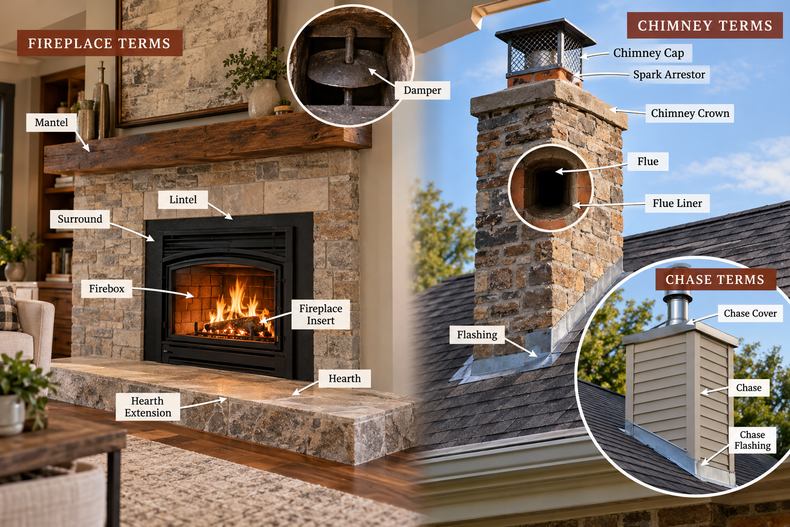
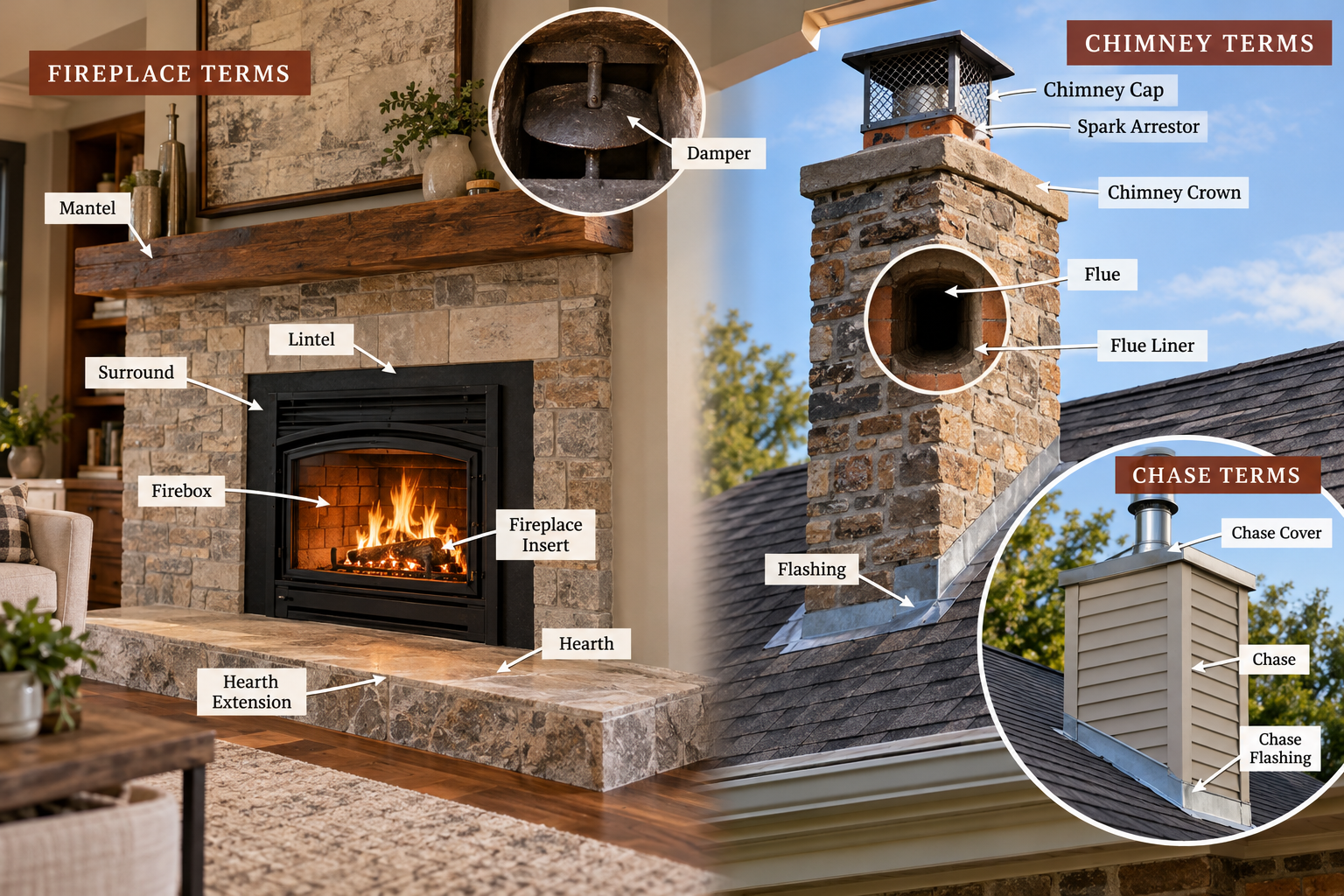
If you are researching a new fireplace, planning a chimney repair, or just trying to understand a quote from a contractor, the terminology can get confusing fast. This guide breaks down the essential terms for fireplaces, chimneys, and chases in plain language, so you know exactly what you are looking at and what you are paying for.
What is the difference between a fireplace, a chimney, and a chase?
A fireplace is the firebox and surround where the fire itself is built or where an insert sits. A chimney is the vertical masonry or metal structure that carries smoke and combustion gases safely out of the home. A chase is a framed, usually wood built enclosure, often covered in siding, that houses a factory built metal chimney instead of a traditional masonry stack. In short, the fireplace makes the heat, the chimney vents it, and a chase is one way of housing that venting system.
Fireplace Terms
Firebox
The interior chamber where the fire burns. In masonry fireplaces this is lined with firebrick, since it must withstand direct, sustained heat.
Hearth
The floor of the fireplace and the noncombustible area extending out in front of it. The hearth protects the surrounding floor from sparks, embers, and radiant heat.
Hearth Extension
The portion of the hearth that extends beyond the firebox opening into the room. Building codes specify minimum sizes for this extension based on the fireplace opening.
Mantel
The shelf or decorative frame surrounding the fireplace opening, typically made of wood, stone, or tile. Mantels are primarily decorative, though code sets minimum clearances between a mantel and the firebox opening.
Surround
The noncombustible material, often tile, stone, or brick, that frames the fireplace opening between the firebox and the mantel.
Damper
A movable plate near the top of the firebox or at the top of the flue that opens to let smoke escape and closes when the fireplace is not in use, to prevent heat loss and keep out drafts, rain, and animals.
Lintel
The structural beam or bar spanning the top of the fireplace opening that supports the masonry above it.
Ash Dump
A small trap door in the floor of the firebox that allows ash to be swept down into an ash pit below, rather than shoveled out by hand.
Fireplace Insert
A self contained heating unit, typically wood, gas, or pellet fueled, installed directly into an existing masonry fireplace opening. Inserts are a common way to improve efficiency and heat output from an old, drafty fireplace.
Chimney Terms
Flue
The passage inside the chimney through which smoke and combustion gases travel to the outside. Every fireplace, wood stove, or gas appliance needs its own properly sized flue.
Flue Liner
The material lining the inside of the flue, whether clay tile, metal, or a cast in place liner. A liner protects the surrounding masonry from heat and corrosive byproducts, and is required by code in most jurisdictions.
Chimney Crown
The sloped concrete or masonry cap covering the very top of a masonry chimney, surrounding the flue opening. The crown sheds water away from the chimney structure and is one of the most common sources of chimney leaks when it cracks.
Chimney Cap
A cover, usually metal mesh, that sits over the top of the flue itself to keep out rain, debris, and animals while still allowing smoke to escape. This is different from the crown, which covers the masonry, not the flue opening.
Spark Arrestor
A mesh screen built into or added onto a chimney cap that prevents sparks and embers from escaping and landing on a roof or nearby combustible materials.
Draft
The upward flow of air through the chimney that carries smoke and gases out of the home. Good draft depends on chimney height, flue size, outdoor temperature, and how well the system is sealed.
Creosote
A dark, tar like byproduct of burning wood that builds up inside the flue over time. Creosote is highly flammable and the primary reason chimneys need regular cleaning and inspection.
Chimney Sweep
A trained professional who cleans and inspects chimneys to remove creosote and identify damage or safety issues. Most manufacturers and fire safety organizations recommend an annual inspection.
Cricket
A small peaked structure built into the roofline behind a chimney, where the chimney meets a sloped roof. A cricket diverts water and snow around the chimney instead of letting it pool against the uphill side.
Flashing
The metal material installed where a chimney meets the roof, sealing that joint against water intrusion. Flashing failure is one of the most common causes of chimney related roof leaks.
Chase Terms
Chase
A framed enclosure, usually built from wood and covered in siding to match the house, that surrounds and conceals a factory built, prefabricated metal chimney. Chases are common with prefabricated fireplaces rather than true masonry fireplaces.
Chase Cover, or Chase Top
The metal cap that seals the top of a chase, with an opening for the metal chimney pipe to pass through. Chase covers are a frequent source of leaks and rust, and are commonly replaced or upgraded during chimney repairs.
Chase Flashing
The metal transition piece where the chase meets the roofline, similar in purpose to chimney flashing on a masonry stack, sealing that joint against water.
Masonry Chimney vs. Factory Built Chimney
A masonry chimney is built from brick, block, or stone, constructed on site, and typically used with traditional wood burning fireplaces. A factory built, or prefabricated, chimney is manufactured off site from insulated metal pipe sections and is typically enclosed in a wood framed chase. Factory built systems are generally faster to install and less expensive than masonry, while masonry chimneys are more durable but require more maintenance over time.
Have a term you have heard from a contractor that is not listed here, or want help figuring out what your existing setup actually is? Contact us at Black Swan Hearth & Home and we will walk you through it.